
Managing Extra Roosters
Local Resources and Responsible Options
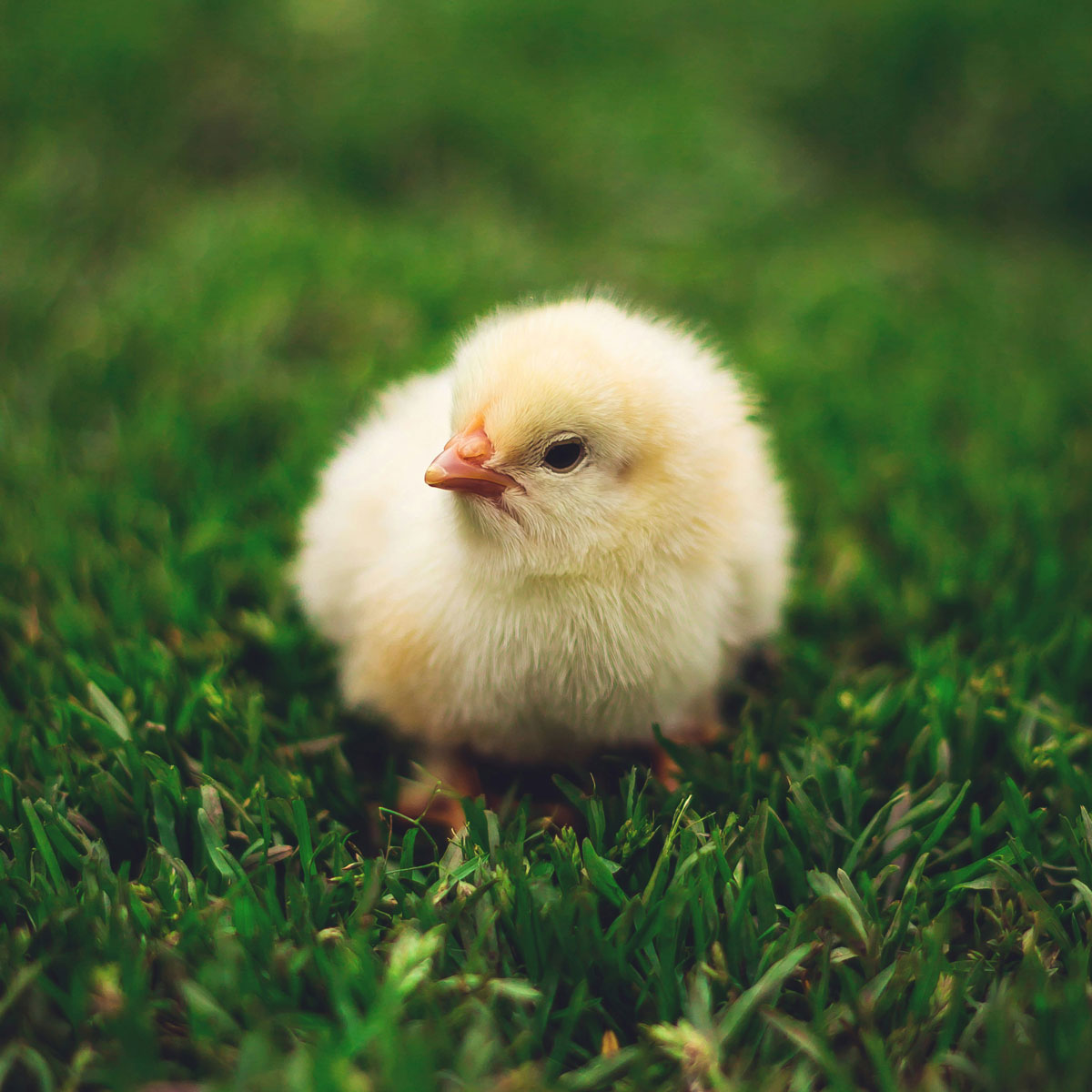
Every spring, thousands of chicks find their way into backyard flocks across Nova Scotia. Along with those adorable peeping babies comes a reality many new chicken keepers don’t think about until months later: Some of those chicks are going to grow up to be roosters.
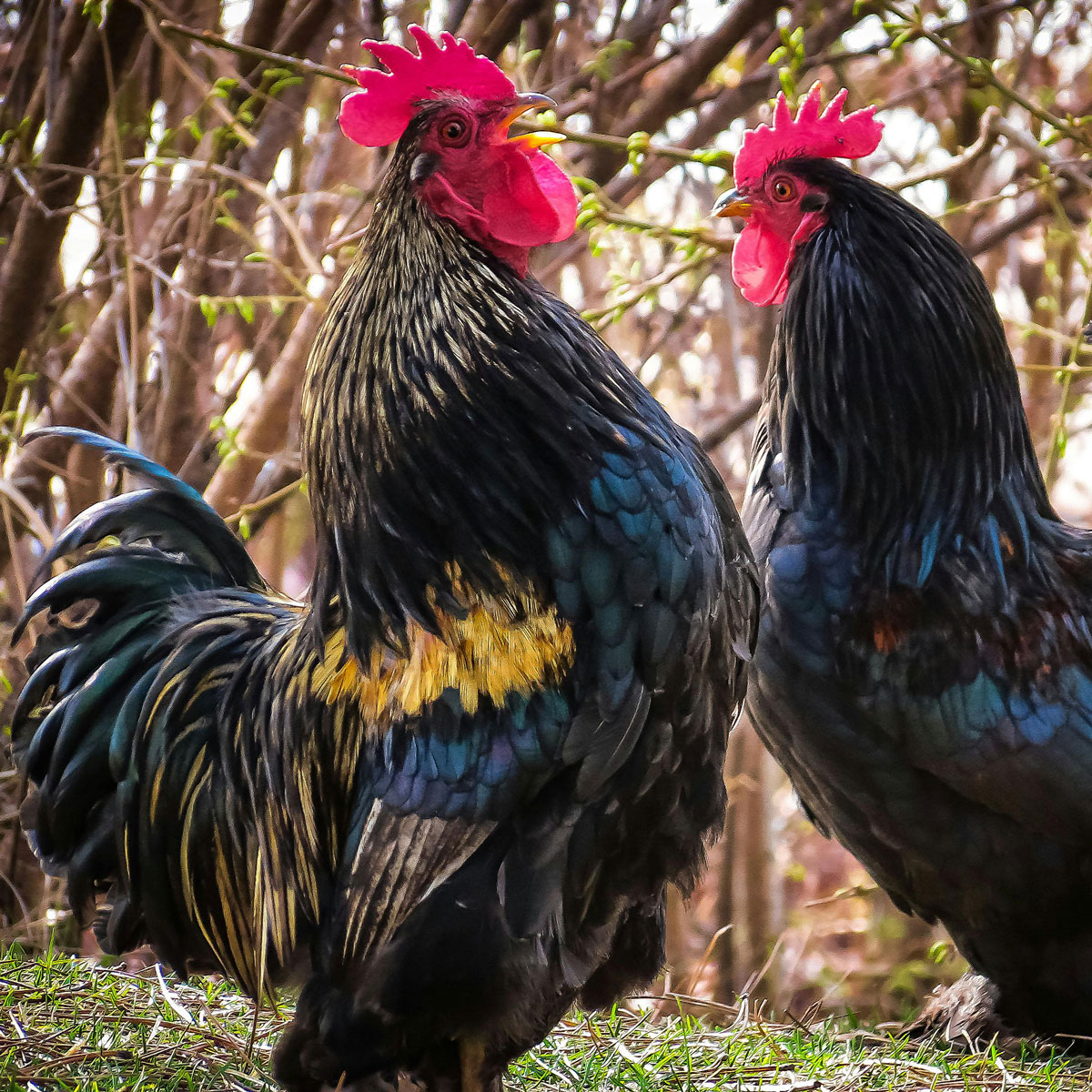
For every hen that hatches, there’s roughly an equal chance a rooster will hatch too. While some flocks can accommodate a rooster, many backyard setups simply don’t have the space, zoning allowances, or flock size needed to keep multiple males long-term. If you’re raising straight-run chicks or hatching your own eggs, it’s important to have a plan for extra roosters before they start crowing.
Local Resources for Re-homing Roosters
If you’ve found yourself with more roosters than you can keep, there are a few local options that may be able to help.
The Rooster Registry
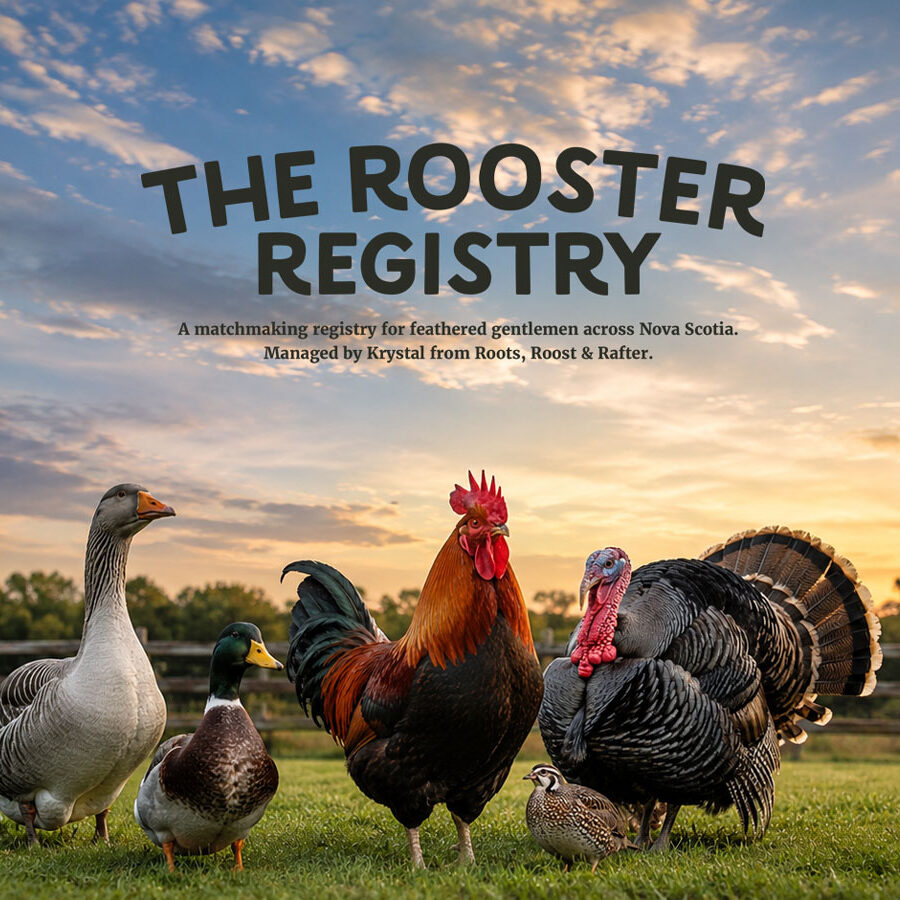
The Rooster Registry is a free community resource created specifically to help connect roosters in need of homes with people looking to add a rooster to their flock.
Whether you’re re-homing a bachelor or searching for a new flock guardian, the registry provides a dedicated place for responsible rooster placements.
Serenity Acres Family Farm
Serenity Acres Family Farm operates a small rooster rescue program and works to help roosters find safe placements. Amanda accepts friendly roosters (they must be good with children!) in good health whenever space allows. Roosters are either integrated with her free range flocks, added to breeding flocks if they meet breed standard, or are re-homed.
While Amanda does not ask for anything in return for giving these roosters a home, I would highly recommend that you consider a small donation (at least enough to cover a bag of feed) when you drop your boy off. She will take them without, she does this out of the goodness of her heart, but it’s a nice gesture to help offset the costs of taking these guys in.
Serenity Acres Family Farm is located in Wilmot, Nova Scotia.
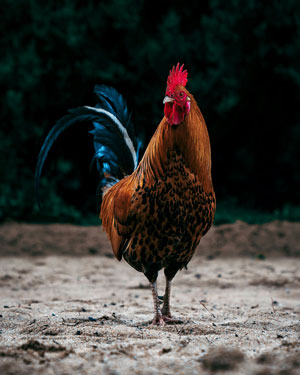
Katherine Cameron – Amherst Area Rooster Sanctuary
Katherine offers a permanent home for friendly roosters near Amherst, Nova Scotia. The roosters have their own coop in the horse barn and her bachelor flock is free-ranged for most of the year with secure run space available when needed (like when the foxes are feeding their babies). When let out to free-range, the boys have a massive three-acre fenced area to explore!
Katherine is able to accept roosters that do not have a history of being aggressive toward people. Birds should be old enough to live outdoors and no longer require supplemental heat, although emergency brooder space is available on a case-by-case basis if needed. Younger birds can be gradually introduced and housed separately until they are ready to join the big boys.
While there is no surrender fee, a donation of a bag of scratch (or the monetary equivalent so Katherine can purchase it when needed) is greatly appreciated when dropping off a rooster. Those looking to rehome a rooster can contact Katherine directly by email using the button below.
Bachelor Flock Placement
Some local poultry keepers maintain bachelor flocks – groups of roosters housed together without hens. Bachelor flocks aren’t suitable for every rooster, but they can be an excellent option for some birds. One such keeper, Leanne Arnott, allows roosters to free-range her property where they help control insects and enjoy a safe place to live out their lives. She is located near Liverpool, Nova Scotia.
Leanne also does not ask for anything in return for giving these roosters a safe place to roam but again, I would highly recommend that you consider a small donation (at least enough to cover a bag of feed) when you drop your boy off.
Keeping a Bachelor Flock
Keeping those “extra” roosters can be an option too.
Another option for managing extra roosters is keeping a bachelor flock – a group of males housed together without hens. Bachelor flocks can work very well, and many poultry keepers successfully maintain peaceful groups of roosters for years. That said, they aren’t as simple as putting a group of boys together and hoping for the best.
Space is one of the biggest factors in a successful bachelor flock. Roosters need room to establish boundaries, avoid one another when tensions rise, and move away from conflicts before they escalate. In general, bachelor groups require significantly more space per bird than a traditional mixed flock. Whenever possible, access to free ranging or a large fenced area can make a tremendous difference. Roosters that have room to spread out are often able to work through social dynamics more peacefully than birds confined to smaller spaces.
Housing design matters too. Providing multiple feeding and watering stations helps reduce competition for resources. Roosts, platforms, shelters, and hiding spots give lower-ranking birds opportunities to avoid more dominant flock members and take a break from the social hierarchy.
If you keep hens on your property, bachelor birds should be housed as far away from them as practical. Roosters that can see, hear, or access hens are more likely to compete with one another, which can lead to increased aggression and fighting.
Like any flock management strategy, bachelor flocks aren’t a perfect fit for every situation. Some groups settle into a peaceful routine, while others may experience ongoing conflict despite good management (make sure you have plans in case you end up with the flock that doesn’t settle into a comfortable routine).
If you’re considering this option, joining the Facebook group “Rooster Allies” is highly recommended. The group is focused on rooster care and bachelor flock management, and its members share valuable real-world experience, tips, and troubleshooting advice that can help set both you and your birds up for success.
Humane Processing Options
Not every rooster can be re-homed.
The reality is that there are often far more roosters than available homes. For that reason, some poultry keepers choose to have excess birds processed for food. If this is an option you are considering, the following individuals and farms may accept surplus poultry. Each location has their own requirements that will be listed, some only accept mature roosters and others accept all ages.
While this can be a difficult decision, humane processing is a responsible option that prevents suffering and ensures the bird is used respectfully.
Jordon Leblanc
Located in Upper Stewiacke, Jordan accepts roosters (and other unwanted poultry) of any age, as long as they no longer require heat. Most birds will be processed and used for meat.
Contact:

Bubby’s Backyard Country Farm
Located in Chester Grant, Dave accepts roosters of all ages to be processed for meat.
Contact:
Roost Ridge Farm
Located in Cape Breton along the Grand Narrows Highway. Sheila accepts roosters that are 6 months or older to be culled and used as feed for her senior dog with allergies.
Contact:
The Butt Hut
Located in Mount Uniacke, Jessie accepts roosters of all ages to be processed and used for meat.
Contact:
Coyote Acres
Located in River John, they take roosters that are 6 months and older to be processed and used for meat.
Contact:
S&M Blacksheep Farms
Located in Greenwood, Stephanie takes roosters 3-4 months and older to be processed and used for meat.
Contact:
Hope For Wildlife
Hope for Wildlife is a wildlife rehabilitation and education center that cares for injured and orphaned wild animals from across Nova Scotia. While they do not accept live roosters for placement, they have advised that they can accept chickens and roosters as feed for the wildlife in their care, provided the birds have already been humanely culled and are left intact and fully feathered before being dropped off.
For many poultry keepers, I realize that this won’t be a practical solution when dealing with unwanted roosters, as the birds must be culled before being accepted. However, it may be a useful option in situations where a predator attack leaves multiple deceased chickens behind so it’s worth mentioning.
Rather than allowing those birds to go to waste, donating them to Hope For Wildlife can help provide food for the many wild animals undergoing rehabilitation at the facility. As with any donation, it’s a good idea to contact them in advance to confirm their current requirements and arrange drop-off details.
Plan Ahead
Make sure you have a plan before you bring home chicks.
One of the kindest things you can do for your future flock is to think about rooster management before your chicks ever arrive.
Ask yourself:
• What will I do if half of these chicks turn out to be roosters?
• Am I allowed to keep roosters where I live?
• Do I have enough space to maintain a proper rooster-to-hen ratio?
• What is my backup plan if I end up with more males than I can keep?
If you know you don’t want to manage roosters at all, consider purchasing sexed female chicks or pullets either from a breeder or one of the feed stores in the province. While sexing isn’t always 100% accurate, it can greatly reduce the chances of ending up with unwanted males.
Please Don’t Dump Roosters
They deserve better.
Unfortunately, every year unwanted roosters are abandoned in parks, wooded areas, and along rural roads. While some people believe they’re “setting them free,” the reality is much harsher. Domestic chickens are not wild animals. Most abandoned birds will die from predation, starvation, dehydration, exposure, disease, or injury. Those that survive often depend on the efforts of rescuers who spend countless hours trying to catch and care for them.
Abandonment doesn’t solve the problem – it simply transfers suffering to the bird.
Roosters deserve better than being left to fend for themselves. If re-homing isn’t possible, a humane end is far kinder than a slow death from hunger, injury, or predators.
A Responsibility We Share
Keeping poultry means making plans for all the birds that hatch – not just the hens. Whether that plan involves keeping a rooster, finding him a new home, placing him in a bachelor flock, working with a rescue, or choosing humane processing, responsible poultry keeping starts with having a plan.
Every rooster deserves a humane outcome and the chance to be treated with dignity.