
How to Recognize, Treat, and Prevent Coccidiosis
A common (but manageable) illness.
Coccidiosis is one of the most common health issues new chicken keepers face. Caused by a tiny parasite that loves damp bedding and dirty water, it can make young or stressed chickens quite sick, quite quickly. The good news? With early detection, a bottle of amprolium, and some good flock management, your birds will be back to scratching in the dirt and squabbling with each other in no time.
In this post, we’ll look at what coccidiosis is, how to recognize the symptoms, what to do if it shows up in your coop, and how to stop it from returning.
Friendly Note: I’m not a vet, just a chicken keeper who’s seen (and treated) her fair share of coccidiosis over the years. I’m sharing what’s worked for me and my flock but always check with a poultry-savvy vet if you’re unsure – they’re the experts!
What Is Coccidiosis?
Coccidiosis (pronounced cock-sid-ee-oh-sis) is a parasitic disease that affects a chicken’s intestinal tract. It’s caused by microscopic protozoa called Eimeria, which are found pretty much everywhere chickens live. Most adult chickens can carry small amounts without issue, their immune systems keep things under control.
The problem comes when chicks or young birds, who haven’t yet built up immunity, ingest too many of the parasite’s eggs (called oocysts) from contaminated bedding, feeders, water, or the soil. Once inside the gut, the parasites multiply fast, damaging the intestinal lining and causing all sorts of digestive trouble.
Generally, by the time a chicken reaches maturity, they will have developed immunity to coccidia and coccidiosis is less of a concern. It’s mainly your young birds who don’t have immunity yet that will get sick.
Spot the Sick Chicken
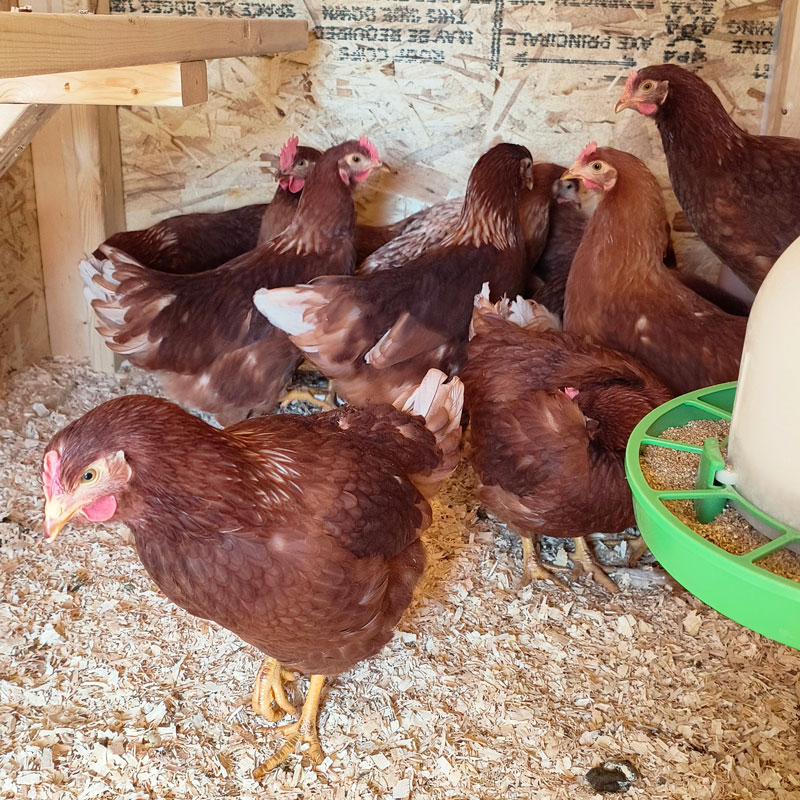
One of these red hens isn’t feeling well. Can you tell which one?
Spoiler alert: she’s the one with her head tucked under her wing next to the feeder.
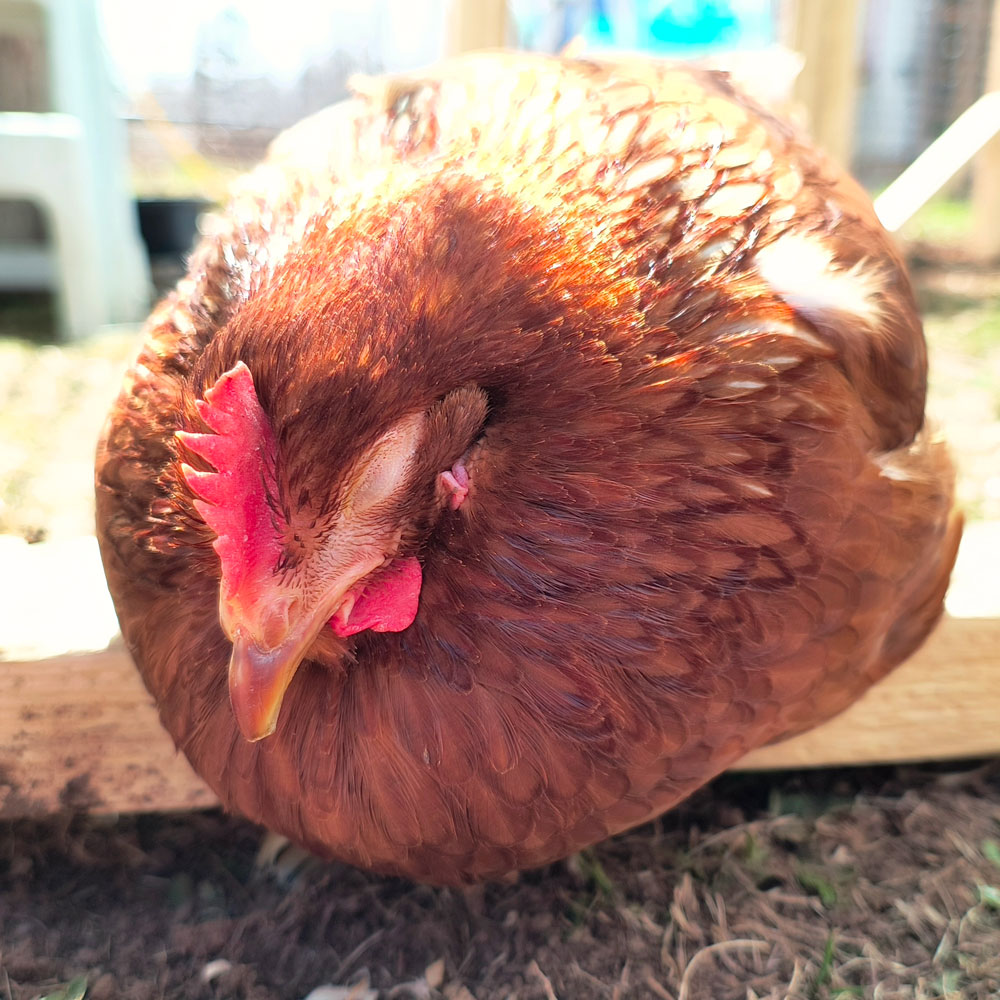
This particular chicken didn’t have coccidiosis, she was just doing poorly after being shipped in from out of province packed in transport crates. Nevertheless, chickens that aren’t feeling well all assume a similar hunched and/or tucked in head posture. Dorma, here, was no different.
Coccidiosis Symptoms to Watch For
While symptoms can vary a bit depending on the specific strain of coccidia your flock encounters, different strains affect different parts of the intestine, there is a fair bit of overlap. Regardless of the strain, early detection makes all the difference. The sooner you recognize and treat the illness, the better the outcome for your birds.
A sick chicken will look tired, puffed up, or less active than usual. They often have their neck pulled in, their tail down, and their eyes half-closed. Sometimes they’ll tuck their head under a wing, too. While this posture is common with coccidiosis, it’s also a general “not feeling great” stance so, if you ever see it, pay attention. Your chicken is telling you something’s wrong.
On top of watching for puffed-up, lethargic birds, keep an eye out for these common signs of coccidiosis:
Loss of appetite: Affected chickens may eat and drink less.
Runny, watery or bloody droppings: This is one of the classic signs, though not always present.
Pale combs or wattles: A sign of anemia from internal damage.
Slow growth or weight loss: Particularly in younger chickens.
Isolation: Chickens feeling unwell often separate themselves from the group.
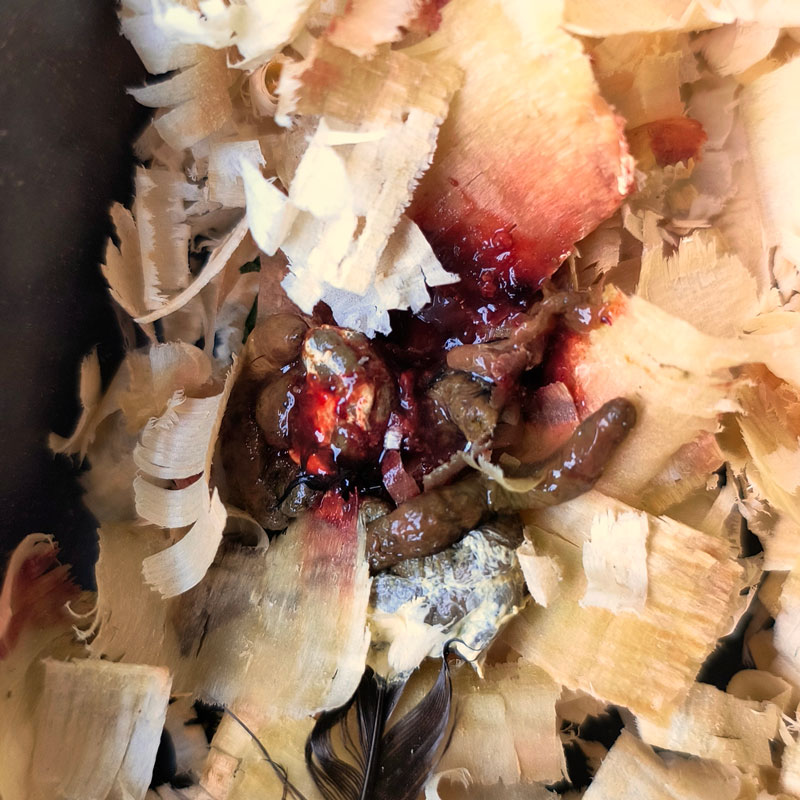
Bloody Droppings Due to Coccidiosis
While blood in your chicken’s droppings isn’t always present with coccidiosis, it fairly often is. This photo shows an example I found in my quarantine pen after (unknowingly) bringing home a few new birds who were already infected.
If blood is not present, extremely watery diarrhea will often be what you find instead.
How to Confirm Coccidiosis
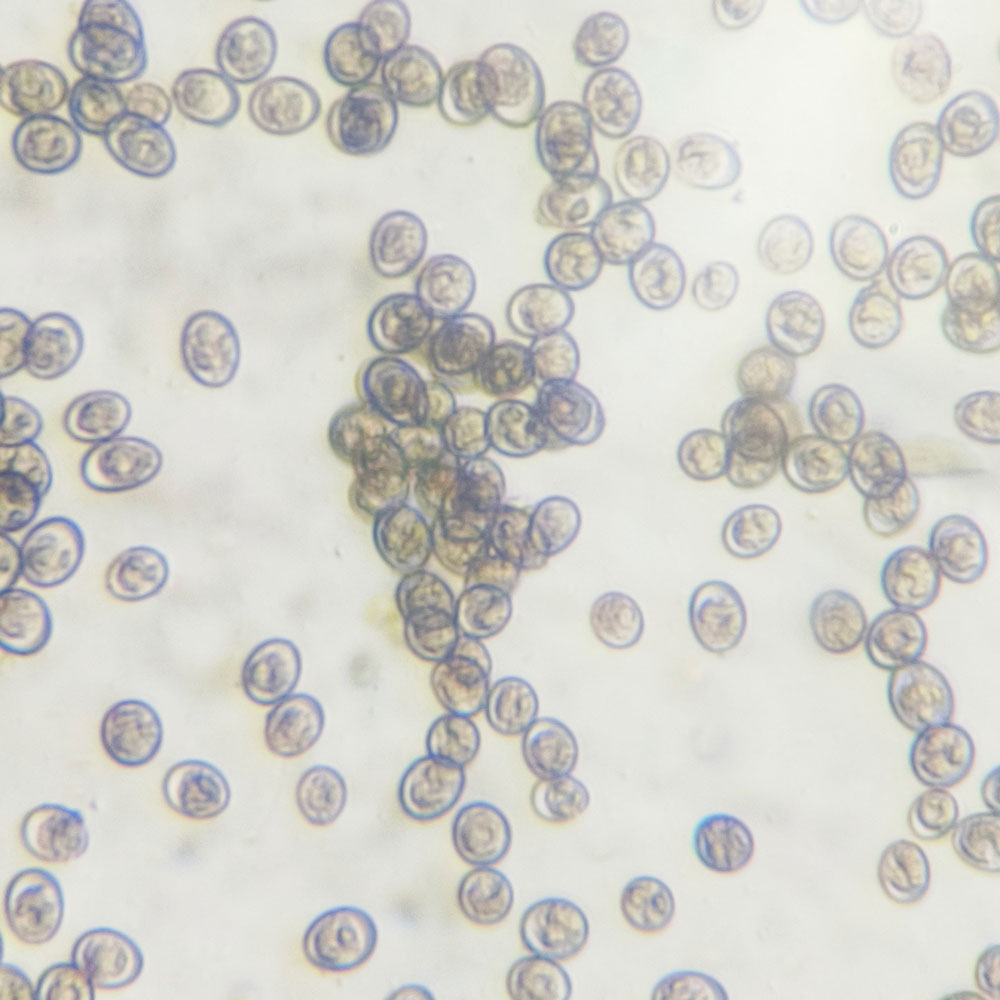
While you can make a pretty good guess based on symptoms, the most reliable way to know whether or not your chicken has coccidiosis is with a fecal exam. You can take a sample to your vet for them to confirm or, if you like to learn new skills, you can absolutely learn to do simple fecal float exams yourself to check for coccidia (and worm eggs) at home.
An inexpensive microscope, a few slides and cover slips, test tubes, and some patience are all you need. I do fecal exams for the flocks over at Roots, Roost & Rafter and I can’t tell you how handy it’s been. It takes about 30 minutes start to finish (most of that time is waiting), and you’ll know for sure whether you’re dealing with coccidiosis or something else.
My total cost for supplies was around $165, and after doing just two fecal exams, the equipment had pretty much already paid for itself. At my vet’s office, fecals run about $80 each between the test itself and a phone appointment to get your results! Sure, you’ll need to restock a few consumables now and then, but they all come from the dollar store. Super affordable.
At some point, I’ll put together a full post on how to do your own fecal exams at home and, when I do, I’ll link it here.
Coccidiosis Treatment Options
If you suspect coccidiosis, you’ll want to act quickly – results are much better when you begin treatment early! The most common treatment is the drug amprolium (often sold as Amprol, Corid, or Cocciaid). This medication is a coccidiostat. Coccidiostats don’t usually kill every parasite outright. Instead, they interfere with the parasite’s metabolism. Amprolium prevents coccidia from using the thiamine (vitamin B1) they need to grow and multiply. It works by mimicking thiamine so that the coccidia absorbs the amprolium instead of real thiamine. This blocks the parasite’s metabolism, effectively starving it. The goal is to slow down the infection, reduce the parasite load, and give your birds’ immune systems a chance to respond and build natural immunity.
In my opinion, a bottle of amprolium is something you should have on your shelf before bringing home chickens – especially chicks. If you happen to live here in the Valley, you can pick it up at the Cornwallis Vet’s office (no appointment needed) for $20-30 plus tax, depending on the brand. Heads up: Cocciaid is usually a bit cheaper than Amprol, but it’s the exact same medication.
In some (rare) cases, an antibiotic that acts as a coccidiocide may be needed. Coccidiocides are more aggressive: they actively kill many of the parasites rather than just slowing them down. Even so, timing matters. If the gut is already badly damaged, coccidiocides can’t reverse that damage – they can only help to kill off the coccidia and prevent further damage. Escalating to this type of medication is not usually needed but, if your birds aren’t responding to amprolium, it’s time to check in with your vet. Don’t hesitate – only a veterinarian can prescribe the required antibiotics and, at this point, things are pretty serious.
Early in my chicken keeping journey, I faced this situation firsthand when a group of chicks just weren’t responding to the usual amprolium treatment. Our vet warned me to prepare for multiple losses, it was that bad. I worried over those those little fluffballs for weeks, expecting to find the worst each morning when I went to clean their pen, but they were tougher than they were given credit for. Every single one of them pulled through and made a full recovery. Thank goodness!
Important!
While you are treating your flock, DO NOT give vitamins or any product containing vitamin B1 (thiamine) at the same time! Doing so will essentially void the treatment. Save those vitamins for after the flock has recovered!
Preventing Coccidiosis in Your Flock
Prevention comes down to good management and helping your birds build gradual, natural immunity.
You can get medicated starter and grower feed that contains a low dose of amprolium. The small amount of medication helps chicks build immunity safely as they encounter coccidia in their environment naturally (it is everywhere, after all).
I never used to feed medicated starter, but after a particularly rough summer battling coccidiosis (thanks to a few new arrivals who brought it with them), I’ve changed my approach. Now, I start my chicks on medicated feed as an extra layer of protection while they build up natural immunity.
You have likely heard that feeding medicated feed will cause a vitamin deficiency in the chicks eating it and, this is something I thought was true. It is all over the internet being touted as a fact, after all. As I’ve learned recently, it turns out that, actually, any interference in the chicks vitamin absorption is quite minimal. Because of how the medication (amprolium) works, it mainly targets the vitamin uptake of the coccidia and not the chick. On top of that, feed is often balanced to compensate for any interference the medication may cause.
Now, maybe in some of the fancier and more fragile breeds (like Silkies), this minimal interference with vitamin absorption could cause issues. Anecdotal evidence would certainly make it seem that way. In my research, I haven’t seen a scientific link though. That definitely doesn’t mean it’s not the case, just that I haven’t seen an “official” connection. It’s something to consider though, there are a lot of Silkie breeders specifically that swear medicated feed causes issues for the breed.
It’s important to remember that medicated feed won’t treat an active coccidiosis infection, the dose is too low for that. It’s simply a preventative tool to help reduce risk during those vulnerable first weeks. Think of it as a safety net, not a cure.
Whether you use medicated feed or not, there are plenty of other simple habits that can go a long way in keeping coccidiosis under control in your flock. Good management makes all the difference in keeping coccidiosis under control. Start by keeping bedding as dry as possible – coccidia thrive in damp, dirty conditions. Raise feeders and waterers off the ground to reduce contamination. I have traditionally used bricks for the smallest chicks and then cinderblocks as they get older, I think I’m going to switch to these water risers the next time I’m raising chicks though. Clean regularly, but don’t over-sanitize. A little exposure actually helps birds build natural immunity. Avoid overcrowding, since stress and tight quarters make chickens more vulnerable to illness. It also means things get dirtier faster. Brooding waterfowl separately from chickens is also helpful in keeping the brooder space dry for the chicks.
Finally, always quarantine new arrivals for at least two weeks before introducing them to your flock. This gives you time to watch for signs of illness, check droppings, and make sure everyone is healthy before they share space, feed, or water. I’ve twice brought home birds that were unknowingly sick with coccidiosis before they arrived, and if I hadn’t quarantined them, things could have been a lot worse than they were. It’s an extra step, and I know well how inconvenient it is, but it can save you a lot of heartbreak in the long run. Quarantining can literally be a lifesaver.
A Note About Biosecurity
While we’re on the topic of quarantine, remember that coccidia don’t always travel by chicken – they can catch a ride on you, too. Oocysts can cling to your boots, clothes, or tools, just waiting for a free trip into a clean coop. I keep a “quarantine only” pair of shoes by the door of my quarantine pen so that nothing travels with me elsewhere. I also make sure to only handle quarantined birds after I finish chores for everyone else.
Even when I don’t have birds on quarantine, I (and my family members) only wear specific footwear in the chicken areas. These boots/shoes never leave the property so that we don’t accidentally allow microscopic tag-a-longs from elsewhere to spread trouble where it doesn’t belong.
Final Thoughts
Coccidiosis is one of those chicken-keeping rites of passage – nobody enjoys dealing with it, but most of us face it at least once. The good news? Once you understand what’s happening, it becomes much less intimidating. With clean conditions, watchful eyes, and quick action, your flock can bounce back quickly.