How much space do chickens and geese need?

Wondering how much space those chickens will actually need? Here are the minimums I use when planning housing for my birds. These are starting points, not a reason to stop measuring once you’ve reached the number. More space is always welcome, especially in a run.

Krystal

Henquiry: “How much space do chickens and geese need?”

This question was submitted through Henquiries and first answered on the Roots, Roost & Rafter Facebook page.

Chickens

Chicken Coops:

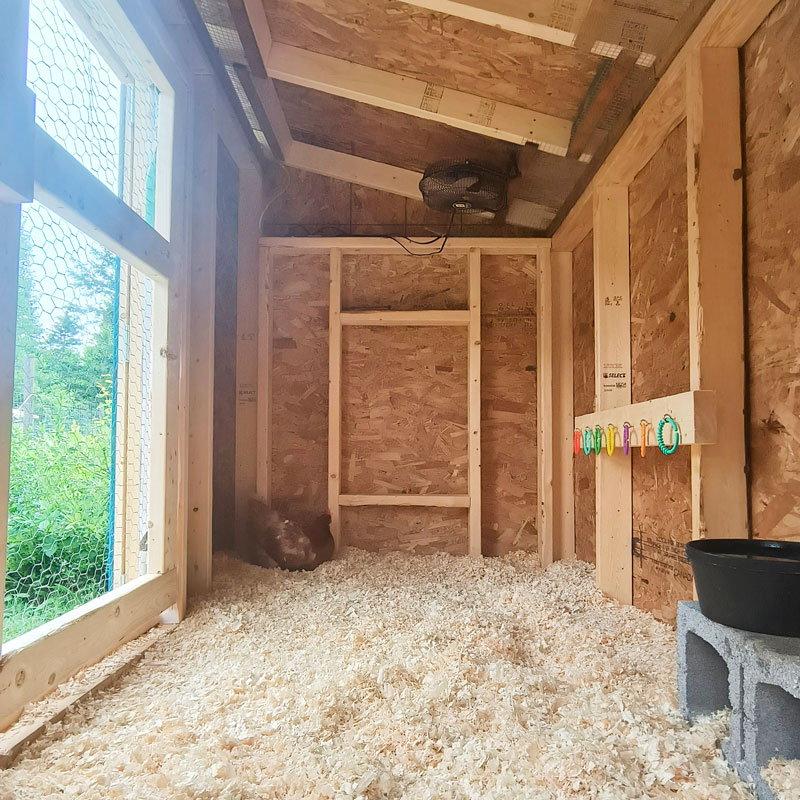
For standard-sized hens, allow at least 4 square feet per hen inside the coop. For bantam hens, allow at least 2 square feet each.

I double that allowance for roosters: 8 square feet for a standard rooster or 4 square feet for a bantam rooster. It isn’t because he’s twice the size of a hen though. Adding a rooster changes how the flock uses the space and interacts, so I give him extra room in the calculation.

For a real-life comparison, my most crowded coop works out to 8 square feet for the rooster and 4.8 square feet per hen. My roomiest provides 10.6 square feet per hen, with the others falling in between.

Chicken Runs

If the birds won’t be free-ranging or pasturing, I’d aim for at least 20 square feet of run per standard-sized bird or 10 square feet per bantam. Double the allowance for a rooster.

If they also have regular access to pasture or free range, my minimum for the run itself is 10 square feet per standard-sized bird or 5 square feet per bantam, again doubled for a rooster. This smaller run figure depends on the birds actually having that additional pasture or free-range space to use.

My own chickens have pasture space or free range for much of the year. My most crowded run works out to 26 square feet for the rooster and 14 square feet per hen; my roomiest offers 32 square feet per hen. The others fall somewhere between.

If your birds will spend a lot of time in their run, give them as much room as you can. More run space is ALWAYS better. A large amount of the issues you will encounter when keeping chickens stem from or are intensified by crowding.

Geese

I don’t teach goose care typically because I am much more experienced with chickens but, since I do have geese, I’ll answer the goose part of the question too.

Goose Coops:

For their shelter, I’d allow at least 8 square feet per goose. Here, Baxter and Sam have 16 square feet each. This gives them room to walk around a bit or flap their wings if they need to. It also allows room for food and water to be placed in the coop with them overnight.

Goose Runs:

For a run used for temporary containment, I’d allow at least 48 square feet per goose. That’s what my goose run provides, but they aren’t normally confined there. During the day they have about 550 square feet each (roughly 1100 square feet in total) of fenced space, and in the evenings they free range around the property.

With geese, I wouldn’t think of the run figure as a substitute for grazing space. Yes, sometimes you need to be able to contain them but a run with the minimum square footage requirement should not be their main living area. I have to contain my geese for Baxter’s sake during the coldest winter months and 48 square feet really only barely feels large enough for them. It would not be much of a life if that was all the space they ever had.

Give them as much land and grass access as you reasonably can. Chickens appreciate the extra space but I would argue that geese require it.

Final Thoughts

The question I always come back to is: How much of the day and how much of the year will the birds actually have access to each space? A run used alongside regular pasture access has a different job from one that has to meet all their outdoor needs.

Winter matters too. If your birds will be confined to the run from the time the ground is heavily covered in snow until it melts, give them more space than you would if they could roam beyond it year-round.


What Past Workshop Attendees Are Saying

You don’t have to take my word for it. Here’s what people who have attended Feathered Fundamentals have said about the experience.

Posted on Google Google
Ryan Barton profile picture
Ryan Barton
Google star 1Google star 2Google star 3Google star 4Google star 5Trustindex verifies that the original source of the review is Google.
Krystal is a great instructor, very friendly and approachable. Her organization and information is impressive
Posted on Google Google
Ashlyne Bigg profile picture
Ashlyne Bigg
Google star 1Google star 2Google star 3Google star 4Google star 5Trustindex verifies that the original source of the review is Google.
Awesome class! The information is priceless! Very inclusive environment and great for beginners through to well seasoned chicken keepers! Highly recommend!
Posted on Google Google
Felicia Mercer profile picture
Felicia Mercer
Google star 1Google star 2Google star 3Google star 4Google star 5Trustindex verifies that the original source of the review is Google.
We moved to the local area and got chickens pretty quickly. Even though I had done a lot of researching and had already been keeping chickens a good while I learned so much! It was also beyond beneficial to have genuine local information on climate considerations, predators, suppliers, vets, community, etc. What you receive both in knowledge and thus confidence, the guidebook and materials, and also time spent with others doing the same thing, it really is an investment that gives you a lot more in return! Highly Recommend Feathered Fundamentals
Posted on Google Google
Melanie Norris profile picture
Melanie Norris
Google star 1Google star 2Google star 3Google star 4Google star 5Trustindex verifies that the original source of the review is Google.
Very informative and helpful, this was a wonderful workshop to attend! Definitely recommend this if you are new to keeping chickens
Posted on Google Google
W Edwards profile picture
W Edwards
Google star 1Google star 2Google star 3Google star 4Google star 5Trustindex verifies that the original source of the review is Google.
Highly recommended! Lots of great information from a very knowledgeable person. Krystal is friendly, experienced and presents the class so even newbies can follow, inviting questions at any time as well as great conversations. Very pleased I attended.
Posted on Google Google
Christie Chaplin-Saunders profile picture
Christie Chaplin-Saunders
Google star 1Google star 2Google star 3Google star 4Google star 5Trustindex verifies that the original source of the review is Google.
What a great opportunity to learn from a knowledgeable, committed and generous leader. Krystal's preparation and guidebook are amazing. This course provides exceptional value, not only to those of us who participated, but also to the broader community, since we are better prepared to avoid mistakes, keep our birds healthy and help others do the same.
Posted on Google Google
Amanda McNeil profile picture
Amanda McNeil
Google star 1Google star 2Google star 3Google star 4Google star 5Trustindex verifies that the original source of the review is Google.
The workshop was awesome! The workbook is extensive, a great resource. But even more, Krystal's deep knowledge of chicken keeping and her willingness to share the her knowledge of the local chicken community, where to get everything from chicks, to supplies, and chicken care, really gave me a lot of confidence that I have the ability and resources now to care for my new flock.
Verified by Trustindex
Trustindex verified badge is the Universal Symbol of Trust. Only the greatest companies can get the verified badge who has a review score above 4.5, based on customer reviews over the past 12 months. Read more

Chicken Care Resources

Recent Blog Posts

The learning doesn’t have to stop when the workshop ends. Here you’ll find chicken-care information, local resources, and practical answers to questions that come up before and after you bring your birds home.

Nova Scotia Chicken Breeder Directory

Nova Scotia Chicken Breeder Directory

March 23, 2026

Finding chickens locally shouldn’t feel like a gamble. Here’s a list of real, established Nova Scotia breeders, plus a few tips to help you avoid scams and bring home your flock with confidence.

How much space do chickens and geese need?

How much space do chickens and geese need?

September 29, 2026

Wondering how much space those chickens will actually need? Here are the minimums I use when planning housing for my birds. These are starting points, not a reason to stop measuring once you’ve reached the number. More space is always welcome, especially in a run.

Feeding a Mixed Flock: What to Feed Hens When You Have a Rooster

Feeding a Mixed Flock: What to Feed Hens When You Have a Rooster

September 20, 2026

Layer feed contains more calcium than roosters and other non-laying birds need. Learn what to feed a mixed flock, why oyster shell should be offered separately, and how a laying hen uses calcium from her diet and bones to build an eggshell.